
Uncategorized
Explore digital health canada: Telehealth, Privacy & More
Welcome to the new era of Canadian healthcare, where your next doctor's appointment might happen right from your living room. The idea of digital health in Canada isn't just a futuristic concept anymore; it's a major shift that moves medical care beyond clinic walls and puts it right in your hands through technology. This change is making healthcare more accessible, private, and convenient than ever before. For a look at the treatments available, you can visit our shop page.
The Future of Healthcare Is Here

Digital health is more than just a buzzword; it's a practical evolution in how we manage our well-being. Think of it as an umbrella term for all the tech designed to improve your health journey. It’s all about putting you back in control, whether you're refilling a prescription from your phone, reviewing lab results online, or speaking with a specialist without leaving home.
This entire transformation is powered by a few key components working together to create a seamless experience. Each one plays a distinct role in making modern healthcare a reality for millions of Canadians.
Core Components of Digital Health
The system is really built on a few core pillars that you’ll likely interact with:
- Telehealth and Virtual Care: This is the part most people are familiar with. It allows you to have real consultations with licensed doctors and nurse practitioners over video or phone. It’s a game-changer for anyone who lives far from a clinic or simply can't take hours off work for an appointment.
- Secure Patient Portals: Think of these as your personal online health dashboard. Here, you can securely log in to access your medical records, see test results, and even send messages directly to your healthcare providers. No more waiting for a callback just to ask a simple question.
- Online Pharmacies and Prescriptions: Getting medication is now incredibly straightforward. After a virtual consultation, your prescription can be sent directly to your local pharmacy for pickup or even delivered discreetly to your door—a huge benefit for sensitive treatments.
This shift isn't just about cool new tech. It’s a direct response to what modern patients actually need and want: more convenience, better privacy, and faster access to care.
A New Approach for Sensitive Needs
One of the biggest wins from Canada's move to digital health is the enhanced privacy it offers. For personal health concerns like erectile dysfunction (ED), the ability to skip a crowded waiting room in favour of a discreet online consultation is a welcome change for so many men.
This model allows you to seek help from the comfort and confidentiality of your own home. Trusted platforms connect you with licensed Canadian medical professionals who can provide a proper diagnosis and, if it’s the right fit, a treatment plan. It’s a patient-first approach that puts your comfort and privacy above all else.
To see how this modern, convenient process works in practice, you can explore available treatments on our shop page.
The Technology Powering Your Virtual Care

Ever wonder what happens behind the screen when you book a virtual appointment or get a prescription refilled instantly? It’s not magic. It’s a sophisticated network of technology working quietly to connect you with your doctor and keep your sensitive information safe. Without it, the convenience of digital health in Canada would be impossible.
At the heart of this system are two key components: Electronic Health Records (EHRs) and telehealth platforms. They work together to make your healthcare journey smoother and more connected.
Think of an EHR as your own secure, digital medical file cabinet. It holds your entire health history—lab results, prescriptions, doctors' notes, and imaging reports—all in one place. Access is strictly limited to you and your authorized healthcare providers, so your privacy is always the top priority.
EHRs are a world away from the old days of cluttered paper files. No more lost charts or unreadable handwriting. Their real strength, though, is creating a single, continuous story of your health that can be accessed exactly when and where it’s needed for your care.
The Challenge of Connection
So, if EHRs are the filing cabinets, telehealth platforms are the communication lines. These are the secure video and messaging apps that let you talk to a medical professional from the comfort of your home. They’re built with encryption to ensure your conversations remain private.
In a perfect world, these two systems would always talk to each other seamlessly. But one of the biggest hurdles in Canadian digital health is interoperability—or the lack of it. Different software systems often don't communicate well, creating digital walls between clinics, hospitals, and pharmacies.
Canada's digital health system has come a long way, with 95% of Canadian physicians now using electronic records. But that number hides a frustrating reality: only 29% of primary care doctors can actually share patient information electronically with specialists or other practitioners outside their own clinic.
This gap means that while your health information is digital, it might be stuck in a silo, unable to follow you to a specialist appointment in a different network. It’s a key area where the system is still playing catch-up.
Making It Work for You
Despite these backend growing pains, the technology is already making a huge difference in patient care. It’s what allows platforms to offer specialized services, from mental health counselling to discreet and confidential consultations for men’s health.
Understanding how these systems work helps you appreciate what goes into getting an online prescription in Canada. It’s a blend of secure data management and private communication, all designed to get you the care you need, when you need it. For a selection of available options, visit our shop page.
How Online Prescriptions Work in Canada
Getting a prescription online in Canada might feel like a new frontier, but it’s actually a process built on the same medical and legal standards you’d find in any doctor's office. The whole system is designed to be just as safe and effective, ensuring you receive the same quality of care.
But to really get comfortable with it, it helps to know who's making the rules.
Think of it this way: at the federal level, Health Canada is the gatekeeper for all medications. They're the ones who make sure any drug prescribed in the country—whether online or in-person—has been rigorously tested and is safe to use. But when it comes to the practice of medicine, like how a doctor consults with you and writes that prescription, the power shifts to the provinces.
Each province and territory has its own College of Physicians and Surgeons. These are the professional bodies that regulate doctors, set the specific rules for medical practice in their jurisdiction, and ultimately decide what’s allowed in the world of telehealth. This provincial oversight is the bedrock of digital health in Canada.
The Doctor-Patient Relationship Is Still Key
Here’s the single most important rule for any valid online prescription: a real doctor-patient relationship must be formed. You can't just fill out a quick form and have pills show up at your door. A licensed Canadian healthcare practitioner has to perform a proper assessment to decide if a treatment is truly safe and right for you.
This consultation is what makes telehealth legitimate. It's your guarantee that a medical professional has reviewed your health history, understood your symptoms, and made an informed clinical judgment. Without that crucial step, a prescription isn't considered medically or legally valid.
The core principle is simple: An online consultation must meet the same standard of care as an in-person visit. A licensed Canadian practitioner must be involved in diagnosing your condition and prescribing treatment.
Provincial Differences in Telehealth
Because healthcare is managed at the provincial level, the specific rules for virtual care aren't the same everywhere. Some provinces have been quicker to create detailed telehealth policies, leading to a patchwork of regulations across the country.
These differences can affect everything from how your first virtual appointment works to what types of medications can be prescribed remotely. For example, the guidelines for how a doctor in Ontario establishes a new patient relationship online might not be identical to the ones in British Columbia.
That’s why it’s so critical to use a platform that knows and follows the rules in your specific province.
To give you a clearer picture, this table breaks down a few of the key differences.
Provincial Telehealth Policies at a Glance
Navigating the web of provincial regulations can seem daunting, but it's designed to protect patients. Below is a snapshot of how some of Canada's major provinces handle key aspects of telehealth, from establishing the initial doctor-patient connection to prescribing rules.
| Province | Physician-Patient Relationship Requirement | Prescribing Guidelines for Online Consultations | Public Coverage for Virtual Visits |
|---|---|---|---|
| Ontario | Can be established virtually for most services. Doctors must meet the same standard of care as in-person. | Generally permissive, but practitioners must ensure the prescription is appropriate based on the virtual assessment. | Most virtual visits are covered by OHIP. |
| British Columbia | A virtual-first relationship is fully permitted. Strong emphasis on clear communication and consent. | Has specific standards for virtual prescribing to ensure patient safety and proper documentation. | Covered by MSP for eligible services. |
| Alberta | Encourages virtual care but requires strict identity verification to establish a new patient relationship securely. | Follows standard prescribing protocols, which have been adapted for a virtual context to maintain safety. | Covered by the AHCIP. |
The good news is, you don't have to become an expert on these regulations yourself. Reputable telehealth platforms are built from the ground up to comply with every provincial rule, connecting you only with clinicians who are licensed to practise in your area. This ensures your care is always safe, legal, and tailored to you.
If you're ready to see how it works, you can explore safe and effective treatment options on our shop page.
Protecting Your Privacy in Digital Health

When you share health information online, you're placing a huge amount of trust in the service you’re using. Your personal health details are some of the most sensitive data you own, and keeping them secure isn't just a "nice-to-have"—it's a non-negotiable for any reputable Canadian digital health platform.
Protecting this information isn’t just good practice; it’s the law. The main piece of federal privacy law that governs how private companies collect, use, and share your personal information is the Personal Information Protection and Electronic Documents Act (PIPEDA). This act sets the ground rules for data privacy right across the country.
Think of PIPEDA as the blueprint for a digital vault. Reputable platforms must build their security measures according to these strict standards. This includes things like powerful encryption to scramble your data, making it completely unreadable to anyone who isn't authorized to see it. Just like a bank vault protects valuables, these digital safeguards are there to protect your health history.
How to Spot a Legitimate Platform
Navigating the online world requires a sharp eye. With so many options out there, it's essential to know how to separate a secure, legitimate digital health service from a questionable one. A trustworthy platform will always be upfront and transparent about its security measures and medical credentials.
Here are a few practical things you can check to make sure you're in safe hands:
- Look for a Clear Privacy Policy: The website should have an easy-to-find privacy policy that clearly explains how your data is collected, stored, and protected under Canadian law. No jargon, no runaround.
- Check for a Secure Connection: Always make sure the website address starts with "https://," not just "http." That "s" stands for secure, and it means that any data sent between your device and their server is encrypted.
- Confirm Canadian Licensing: A legitimate service will be proud to show that its medical team is made up of doctors and nurse practitioners who are fully licensed to practise right here in Canada.
When a digital health service prioritizes your privacy, it's a clear signal of its commitment to high-quality, ethical care. That transparency is just as important as the treatment itself.
Making a Confident and Safe Choice
Knowing what to look for empowers you to make confident decisions about your healthcare. Before you sign up or share any information, take a few minutes to verify these key details. It's a small investment of your time that goes a long way in ensuring your sensitive information stays private and secure.
Understanding these privacy fundamentals is crucial, especially when you're looking for treatment for sensitive conditions. For more on how legitimate platforms handle the whole process, check out our guide on getting a prescription from an online doctor. By sticking with platforms that follow Canada’s strict privacy laws, you can confidently get the care you need. You can find our product offerings on our shop page.
Why Canadians Are Embracing Virtual Care
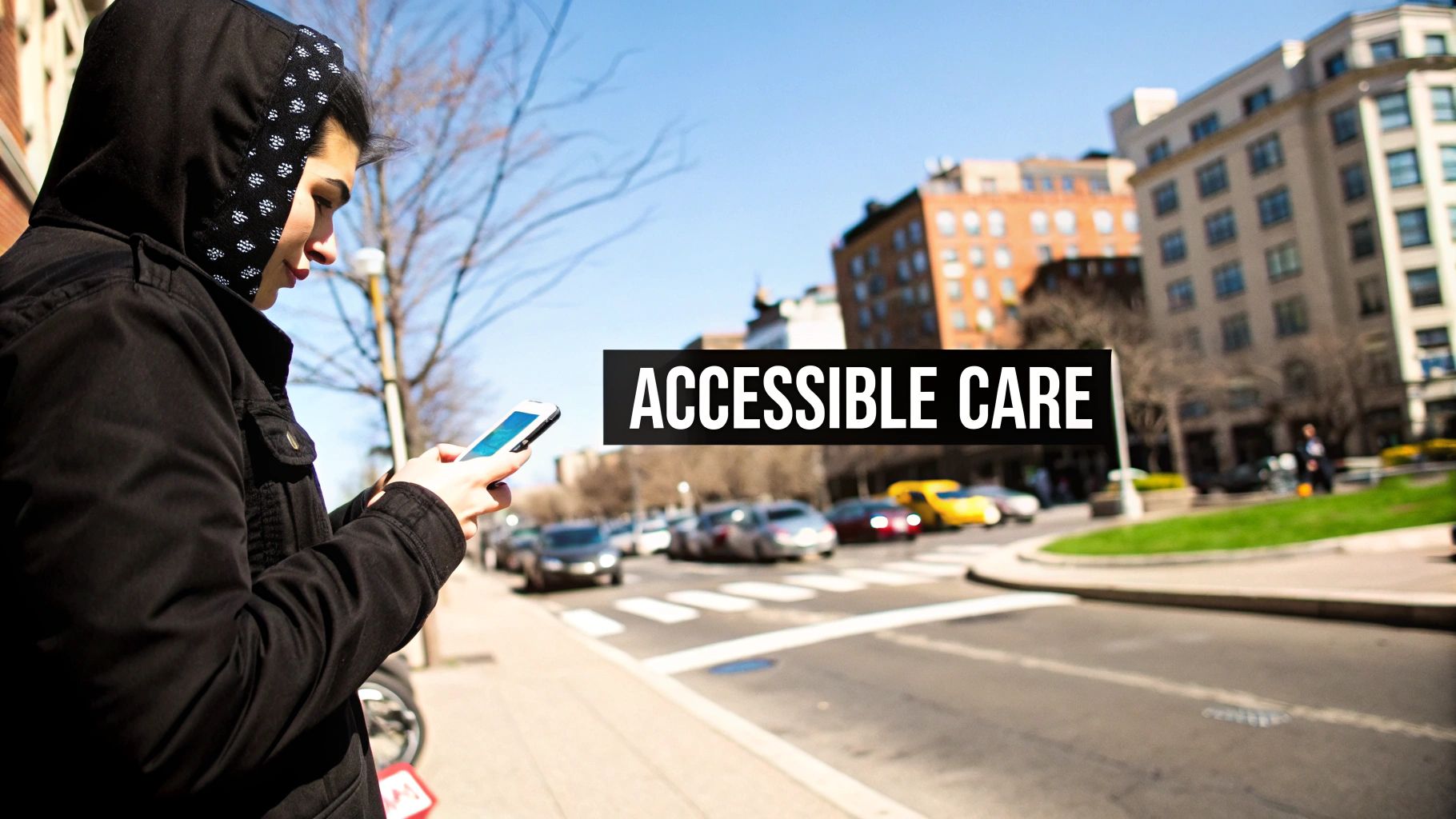
The move toward digital health in Canada isn't just a fleeting trend—it’s a fundamental shift in how we think about our well-being. Canadians aren't just getting more comfortable with technology in their healthcare; they're actively choosing it for its clear, practical benefits.
This isn't simply about skipping a trip to the doctor's office. It's about taking back control of your time and your health. Virtual care cuts out travel, reduces time booked off work, and opens up access to specialists who might otherwise be hours away. It's just a smarter, more patient-focused way to manage your health.
The numbers don't lie. In 2023, 39% of Canadians went online to access their health information, a solid jump from just 32% in 2021. That leap shows just how much the convenience of telehealth, first normalized during the pandemic, has become a new standard for many.
Convenience Meets Confidentiality
Beyond just saving time, privacy is a huge reason why so many Canadians are turning to online platforms. For personal health issues like erectile dysfunction (ED), the old way of doing things—sitting in a waiting room, talking face-to-face—can be a massive barrier to even asking for help.
The ability to have a discreet consultation from the privacy of your own home removes much of the anxiety and stigma that can be associated with discussing personal health matters.
This need for discretion is a powerful motivator. Virtual care creates a confidential space where you can speak honestly with a licensed medical professional, free from the awkwardness of a public clinic. It makes seeking treatment feel normal by making the entire process more private and far less intimidating.
A Modern Standard of Care
This widespread adoption of digital health is changing what Canadians expect from good medical care. It's not just about getting the right diagnosis anymore; it's about how accessible and comfortable the whole experience is. Platforms that get this right are setting the new benchmark.
- Immediate Access: Get medical advice and answers without having to wait weeks for an appointment.
- Total Discretion: Discuss sensitive subjects in a secure, private, one-on-one virtual setting.
- Unmatched Convenience: Handle your health from anywhere, slotting appointments into your actual life.
At the end of the day, the shift to virtual care is a common-sense response to the demands of modern life. To see exactly how these services deliver specialized care right to your door, take a look at our guide on getting online prescriptions in Ontario. This isn't some far-off future—it's the efficient, intelligent way Canadians are taking charge of their health today. You can browse our treatment options on our shop page.
Your Digital Health Questions Answered
Stepping into the world of virtual care can feel a little uncertain at first. As digital health in Canada becomes a more normal part of managing our well-being, it’s completely natural to have questions. This section is here to give you clear, straightforward answers to the most common concerns people have.
Think of it as your go-to guide to clear up any confusion and help you feel more confident. The goal is to give you practical, no-nonsense info so you can make the best decisions for your health.
Is It Legal and Safe to Get a Prescription Online in Canada?
Yes, it's both legal and safe—but only if you're using a legitimate, compliant telehealth platform.
Here's the key: the service must connect you with a real healthcare provider who is licensed to practise medicine in your province. This professional is responsible for conducting a proper medical consultation to establish a valid doctor-patient relationship, exactly like they would in a clinic.
This step is an absolute must. It ensures that any treatment prescribed for conditions like ED is medically sound and right for you. Reputable platforms also use secure, encrypted technology to protect your private information and partner with licensed Canadian pharmacies to fill your prescription. Always do a quick check on a service's credentials before moving forward.
How Do I Know if a Digital Health Platform Is Trustworthy?
You can usually spot a trustworthy platform by looking for a few tell-tale signs of legitimacy. These are the green flags that show a company takes your health and privacy seriously.
- Licensed Canadian Practitioners: The platform must clearly state that its medical team is made up of doctors or nurse practitioners fully licensed to practise in Canada. No exceptions.
- A Clear Privacy Policy: Look for a detailed privacy policy. It should explain exactly how your personal health information is protected under Canadian laws like PIPEDA.
- Mandatory Consultations: A legitimate service will always require a medical consultation before issuing a prescription. If they don't, it's a major red flag.
- Transparent Information: The platform should be upfront about its pricing, provide easy-to-find contact details, and offer accessible medical support for follow-up questions.
These elements aren't just good practice; they're signs of a company that operates above board and puts patient safety first.
Will My Provincial Health Plan Cover Online Consultations?
This is where it gets a bit tricky, as coverage varies wildly from one province to the next. Many provincial plans, like OHIP in Ontario or MSP in British Columbia, will cover virtual visits with your family doctor or a specialist you've been referred to through the public system.
However, private telehealth platforms that offer specialized, direct-to-consumer services usually operate outside of provincial health coverage. You’ll typically pay for these services out-of-pocket.
The trade-off? For that direct payment, you often get much faster access to care, more privacy, and a level of convenience that many people find is well worth it for their specific health needs.
What Happens to My Medical Information After an Online Visit?
Under Canadian law, your medical information is treated with the strictest confidentiality and must be protected.
Any compliant digital health platform is legally required to store your data on secure, encrypted servers, following both federal (PIPEDA) and provincial privacy laws. This information becomes part of your medical record with that specific provider, just like a file in a doctor's office.
It is not shared with anyone—your employer, your insurance company, anyone—without your explicit consent, unless it’s legally required or needed to coordinate your care with another specialist (and even then, only with your permission). Simply put, protecting your privacy isn't just a promise; it's the law.
These answers should help clarify how digital health in Canada works safely and effectively. When you're ready to take the next step with a trusted provider, you can explore treatment options on our shop page.

 English
  French
Pingback: Pocketpills online pharmacy: Safe, Verified Prescriptions in 2026
Pingback: Felix Health: is felix health legit? 2026 review and licensing insights
Pingback: Pond Mills Pharmacy: A 2026 Guide to Services & Hours
Pingback: Rate My Doctor British Columbia: Your 2026 Guide