
Uncategorized
Best Testosterone Booster for Erectile Dysfunction: Picks

Nov
When you’re looking for the best testosterone booster for erectile dysfunction, it’s important to first get a clear picture of how the two are connected. While low testosterone can definitely play a role in ED, it's not always the direct cause. The best solution will always go after the root of the problem, and that means understanding how these systems actually work together.
The Connection Between Testosterone and ED

A lot of guys think that erectile dysfunction is a sure sign of low testosterone, but the link is more subtle than that.
Think of it this way: testosterone is the spark that lights up your libido, or your desire for sex. Your body’s physical systems—healthy blood flow, nerve signals, and blood vessels—are the engine that actually achieves and maintains an erection.
If that spark from testosterone is weak because your levels are low, the engine might not get the signal to start. This is why a classic symptom of low testosterone is a drop in your sex drive. Without that initial desire, getting an erection can be tough, even if your physical "engine" is in perfect shape.
Why Testosterone Is Only Part of the Puzzle
It's crucial to understand that ED is a complex issue with many potential causes. While low testosterone can put a damper on your desire, other factors often have a more direct impact on the physical mechanics of an erection. These can include:
- Circulatory Issues: Things like high blood pressure, high cholesterol, and heart disease can all get in the way of blood flow to the penis.
- Nerve Damage: Diabetes, spinal cord injuries, or even complications from surgery can interfere with the nerve signals needed for an erection.
- Psychological Factors: Stress, anxiety, and depression can have a huge impact on sexual performance.
Getting this distinction right is the key to finding a solution that works. A testosterone booster might help reignite your libido if your levels are clinically low, but it’s not going to fix an underlying circulatory problem.
ED Is a Common Health Concern
Erectile dysfunction is an incredibly common issue, affecting men of all ages. Here in Canada, it's a significant health concern.
Studies show that about 24.2% of adult men meet the diagnostic criteria for ED. This number climbs sharply with age, affecting 48.0% of men aged 65–74. But younger guys aren't immune—the rate is around 17.9% for those aged 18–24. You can read the full research about these findings to learn more.
By clarifying that low testosterone is just one of many potential causes for ED, you can better identify the right treatment path. This foundational knowledge helps you see why a supplement isn't a magic bullet but a targeted solution for a specific problem.
To effectively address your concerns, it’s important to identify the true cause. For those seeking reliable solutions, you can explore options on our shop page.
Natural Boosters vs. Medical TRT Explained
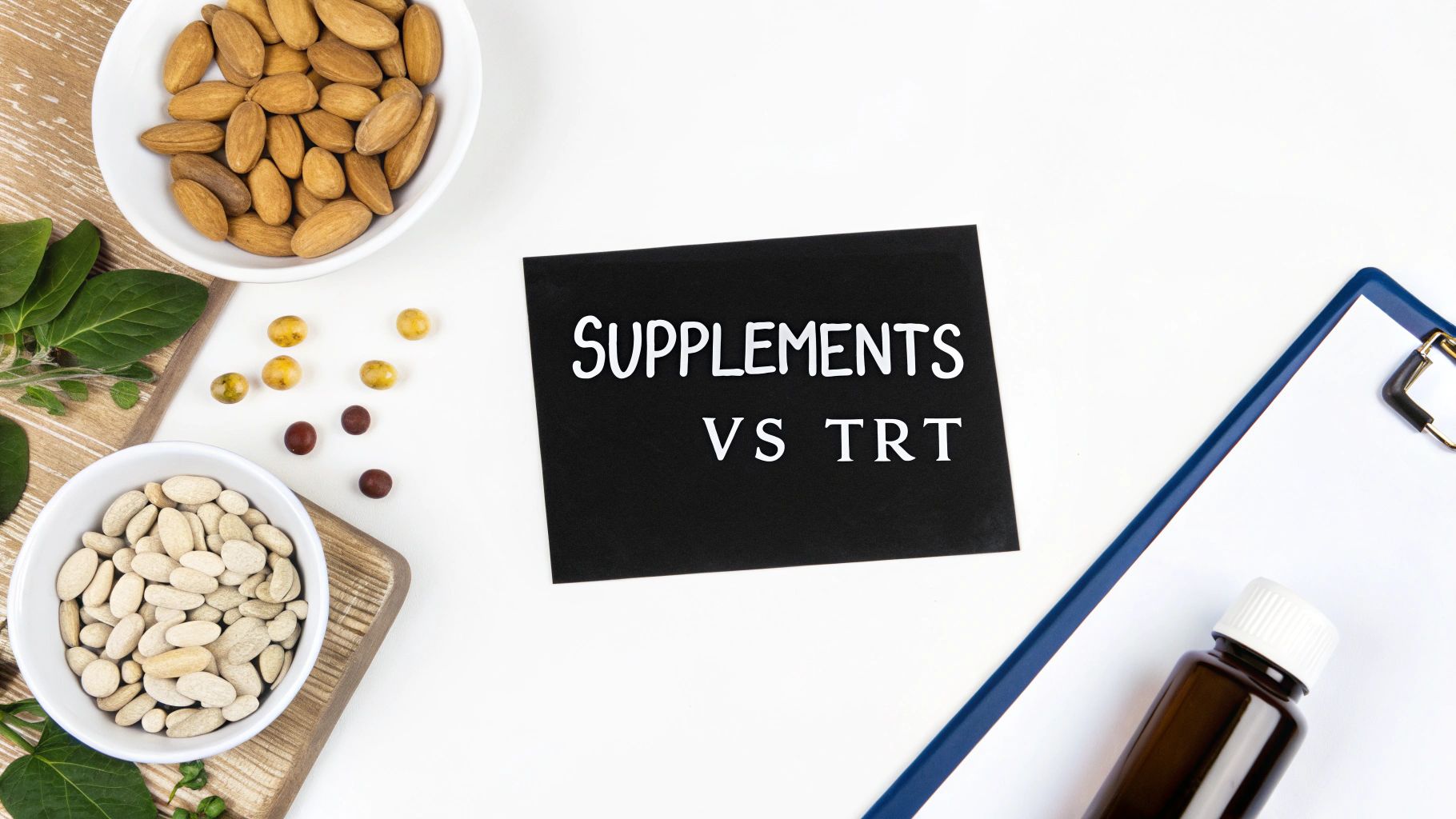
When you start looking for the "best testosterone booster for erectile dysfunction," you'll quickly find yourself at a crossroads. On one side, you have over-the-counter (OTC) supplements. On the other, you have medically prescribed Testosterone Replacement Therapy (TRT). These two paths are worlds apart, and knowing the difference is crucial for your health and safety.
Think of your body’s natural hormone production like a factory. Natural testosterone boosters are like giving your factory workers better tools and raw materials. They contain ingredients like zinc, fenugreek, or D-aspartic acid, which are meant to support your body's own ability to make testosterone more efficiently.
Crucially, these supplements contain zero actual testosterone. The goal is simply to help optimize your body's existing machinery, which might be helpful if your levels are a little low due to things like diet or lifestyle.
What is Medical TRT?
Now, let's talk about Testosterone Replacement Therapy (TRT). This isn't about giving your factory better tools; it's about bringing in finished products from an outside supplier because your factory isn't meeting demand. TRT is a serious medical treatment prescribed only for men diagnosed with hypogonadism—a condition where the body is clinically unable to produce enough testosterone.
TRT directly adds bioidentical testosterone to your system using gels, injections, patches, or pellets. It’s a powerful intervention designed to bring clinically low hormone levels back into a healthy range, and it requires strict supervision from a doctor.
The core difference is simple: OTC boosters support your body’s own production, while medical TRT replaces what your body can't make.
The difference in purpose, strength, and medical oversight is massive. OTC supplements fall under general wellness, while TRT is a targeted treatment for a diagnosed medical condition.
To make the distinction crystal clear, let's break it down side-by-side.
Comparing OTC Testosterone Boosters and Medical TRT
| Feature | OTC Testosterone Boosters | Medical TRT (Prescription) |
|---|---|---|
| Primary Goal | Support natural hormone production; general wellness and optimization. | Treat clinically diagnosed low testosterone (hypogonadism). |
| Ingredients | Vitamins, minerals, and herbal extracts (e.g., Zinc, Fenugreek). No hormones. | Bioidentical testosterone. |
| How It Works | Provides building blocks to help the body make its own testosterone. | Directly adds testosterone to the body to raise blood levels. |
| Regulation | Sold as dietary supplements; not regulated for effectiveness by Health Canada. | Prescription-only medication, highly regulated and clinically proven. |
| Oversight | No medical supervision required. | Requires a doctor's diagnosis, prescription, and ongoing monitoring. |
| Best For | Men with slightly suboptimal levels due to lifestyle or minor nutrient gaps. | Men with a confirmed medical diagnosis of hypogonadism. |
| Effectiveness | Varies widely; mild or no effect for those with truly low T. | Highly effective for raising testosterone levels to a normal range. |
As you can see, these are not interchangeable solutions. Choosing the right one starts with understanding your actual health needs.
Setting Realistic Expectations
It’s vital to be realistic about what each option can deliver. An OTC booster might give you a slight bump in energy or libido if your levels are just a bit off. But it will not fix a genuine clinical deficiency. It's like trying to fix a broken engine with a better brand of gasoline.
On the flip side, TRT can be life-changing for men with confirmed low T, but it's a serious medical commitment with potential side effects that needs constant monitoring. If you're looking for a comprehensive assessment of your health, a specialized men's health clinic in Toronto can provide the expert diagnostics and guidance you need.
Ultimately, the best path forward isn't found in a bottle on a shelf—it's found through a proper medical diagnosis. The right "booster" for your ED starts with understanding the root cause, and that requires professional testing and a conversation with a healthcare provider. You can find proven treatments on our shop page.
When a T-Booster Can Actually Improve ED
A testosterone booster is only going to fix your ED if low testosterone is the actual problem. It sounds obvious, but this is the single most important thing to get right when you’re looking for a solution.
Trying to fix a circulatory issue with a T-booster is like trying to fix a flat tyre by refuelling your car—it completely misses the root of the problem.
So, when can raising your T levels genuinely make a difference in the bedroom? The main scenario is when blood tests confirm you have clinically low testosterone, a condition called hypogonadism. In this case, the hormonal "spark" needed to ignite your libido is weak, which makes it tough to get or keep an erection, even if everything else is working perfectly.
Identifying the Root Cause is Non-Negotiable
More often than not, erectile dysfunction is a symptom, not the core issue. It's a sign that something else is going on in your body. For many men, ED has nothing to do with testosterone at all.
Common culprits include:
- Poor Circulation: Things like high blood pressure, clogged arteries (atherosclerosis), or heart disease can seriously restrict the blood flow needed for a firm erection.
- Nerve Damage: Diabetes is a major cause here, as it can damage the nerves responsible for sending the "go" signal to your penis.
- Psychological Factors: Never underestimate the power of your mind. Anxiety, depression, and relationship stress can shut down sexual performance fast.
If your ED is caused by any of these, even the most potent testosterone booster in the world won’t do a thing. This is why getting a proper diagnosis from a doctor is absolutely essential before you spend a dime. Self-diagnosing is a surefire way to waste time and money chasing solutions that can't work.
Key Takeaway: The effectiveness of a testosterone booster for ED hinges entirely on an accurate diagnosis. If your testosterone levels are already healthy, trying to push them higher is unlikely to improve your erections and could even be unsafe.
How Boosting T Can Enhance Other ED Treatments
Now, there’s another important angle to this. For men who do have confirmed low T, bringing those levels back to normal can sometimes make other ED medications work a lot better.
Think about it: drugs like sildenafil (the active ingredient in Viagra) work by improving blood flow, but they still need sexual desire to kick things off. You can get the full rundown on what sildenafil is used for in our detailed guide.
By restoring testosterone to a healthy range, you reignite that foundational libido. This gives medications like sildenafil the green light they need to do their job properly. It's a team effort.
Recent research reviewing medical claims from over 59 million men in California found a significant overlap, with 4.16% diagnosed with ED and 3.18% with hypogonadism. Learn more about these findings on testosterone and ED.
Ultimately, addressing low testosterone can be a critical piece of the puzzle—but only when it’s the piece that’s actually missing. To explore effective, medically-backed treatments for ED, visit our shop page for safe and reliable options.
Lifestyle Changes to Support Testosterone and ED

Before you even think about supplements or medical treatments, it's worth knowing that the most powerful tools for supporting healthy testosterone and erectile function are already in your hands. Building a foundation of solid habits is the non-negotiable first step. These changes create the right internal environment for your hormones and circulatory system to do their jobs properly.
Think of it like this: your body is a high-performance engine. You can't expect it to run well on cheap fuel and zero maintenance. In the same way, your hormonal health and sexual function depend directly on the quality of your sleep, nutrition, and physical activity.
The Cornerstones of Hormonal Health
Making a few targeted improvements can deliver some surprisingly big results. These habits work together to lower stress, fire up hormone production, and improve blood flow—all critical pieces of the puzzle when you're dealing with both low T and ED.
- Prioritise Deep Sleep: Your body does most of its testosterone production during deep sleep. That's it. Consistently getting 7-9 hours of quality sleep every night is probably the single most effective natural strategy for getting your hormones back on track.
- Embrace Resistance Training: Lifting weights isn't just for building muscle. Resistance exercises have been scientifically proven to give your testosterone production a serious jolt. Focus on big, compound movements like squats, deadlifts, and bench presses to get the most bang for your buck.
- Fuel Your Body Wisely: A balanced diet built on whole foods is non-negotiable. Make sure you're getting enough healthy fats, lean proteins, and complex carbs. Certain nutrients, like zinc and vitamin D, are the direct building blocks for testosterone.
These foundational practices are your first line of defence. Nailing them down can make a noticeable difference in your energy, libido, and overall sense of well-being.
Taming the Testosterone Killer: Cortisol
Chronic stress is the silent enemy of male hormonal health. When you're constantly on edge, your body pumps out high levels of cortisol, the primary stress hormone.
Cortisol and testosterone have a see-saw relationship. When cortisol is high, testosterone production gets pushed down. Managing stress isn't just for your mental health—it's a direct strategy for protecting your T levels.
You don't need a complicated plan. Simple things like meditation, a few deep breathing exercises, or even just taking a walk in nature can help bring cortisol back down and give your testosterone a chance to recover.
The Impact of Substance Use
We also have to talk about alcohol and other substances. Public health data from California paints a pretty clear picture of the link between substance use and sexual health problems. Between 2020 and 2021, the state recorded an average of 19,335 alcohol-attributable deaths each year, with men making up the majority.
Chronic, heavy alcohol use is a known testosterone suppressor, which directly contributes to a lower sex drive and erectile difficulties. You can explore more about these public health findings to get a better sense of the wider impact.
By focusing on these lifestyle pillars first, you create the best possible conditions for your body to function at its peak. For products designed to complement a healthy and active lifestyle, you can explore the options available on our shop page.
Your Next Steps: Getting Tested and Seeking Advice
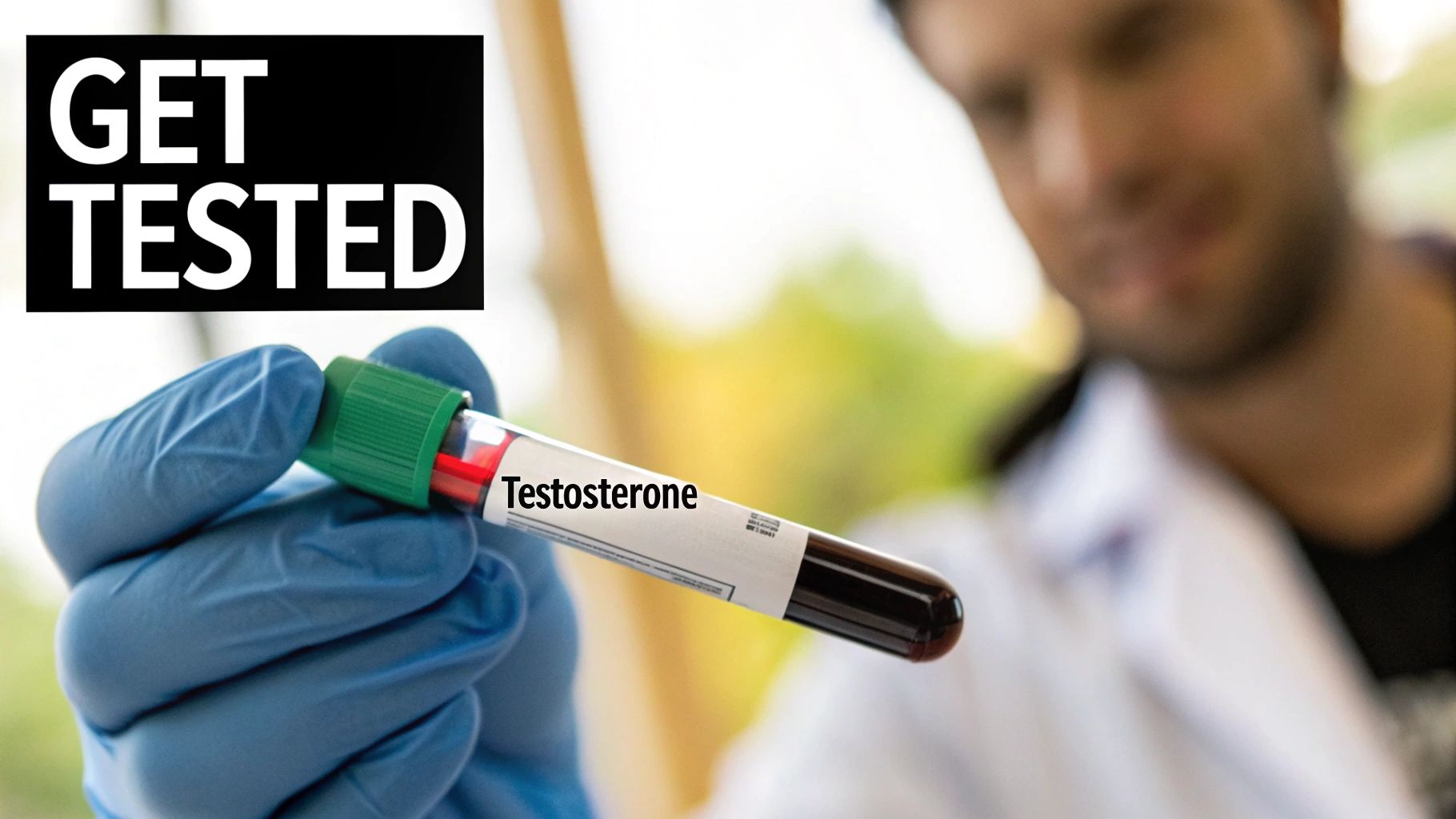
Navigating the world of supplements and treatments can feel overwhelming, but the path forward is actually quite clear. Instead of guessing which "best testosterone booster for erectile dysfunction" might work, your most powerful move is getting a professional diagnosis. Think of it as your roadmap to a solution that’s both safe and actually targets the root cause of the problem.
Talking to a doctor cuts through all the noise and guesswork. It shifts you from speculating about your health to understanding it with certainty. This conversation is the single most important starting point for any effective treatment plan, ensuring you don’t waste time or money on things that won’t help.
The cornerstone of this whole process? A simple blood test.
Understanding the Essential Blood Test
To know for sure if low testosterone is contributing to your ED, you need a specific blood test that measures your hormone levels. A doctor will typically order a panel checking for two key markers to get the full picture of your hormonal health.
- Total Testosterone: This measures the overall amount of testosterone in your blood. It includes both the active hormone and the portion that's bound to proteins, which your body can't readily use.
- Free Testosterone: This measures the "unbound" and active testosterone. This is the hormone that's actually available to influence things like your sex drive, energy levels, and erectile function.
Getting both of these numbers is critical. It’s the only real way to get a definitive answer and confirm if a hormonal issue is truly in the mix.
A professional medical diagnosis is your most powerful tool. It transforms confusion into clarity, allowing you to focus on treatments that are scientifically validated to work for your specific situation.
Exploring Proven and Safe Treatment Pathways
Once you have a clear diagnosis, you and your doctor can explore a full spectrum of proven treatments. If it turns out your testosterone levels are perfectly normal, your doctor will likely start investigating other common causes of ED.
For instance, they may recommend PDE5 inhibitors. These are highly effective prescription medications that work by improving blood flow to the penis. They are the go-to, first-line medical treatment for ED for a reason—they address the physical mechanics of an erection directly and have a long history of success. For safe and reliable options, visit our shop page.
If your blood work does confirm clinically low testosterone, then medically supervised Testosterone Replacement Therapy (TRT) might be a suitable option. In some cases, where ED is a result of multiple factors, your physician may even suggest a combined approach. For a more detailed look at what professional services can offer, you can learn about treatment options at an erectile dysfunction clinic in Toronto.
Ultimately, seeking professional advice ensures you treat the actual cause of the problem. This not only leads to better results but also prioritizes your long-term health and safety, helping you find a reliable and sustainable solution.
Putting It All Together: Making the Right Call for Your Health
So, where do we go from here? We've untangled the term 'testosterone booster', and it's clear that finding the right path for your erectile dysfunction all comes down to what’s actually causing it.
If there’s one thing you take away from this guide, let it be this: start with a medical diagnosis. Trying to fix the problem yourself without knowing the root cause is a gamble—with both your health and your wallet.
We've drawn a hard line between over-the-counter supplements and medically prescribed TRT, and the difference is massive. One is like hiring a support crew for your body’s hormone factory; the other is like having the finished product delivered directly because the factory has shut down. The best "testosterone booster" for erectile dysfunction is simply the one that addresses what your body actually needs, and only a healthcare professional can figure that out.
Our goal here is to arm you with the knowledge to tackle this with confidence and a healthy dose of caution. Always put your long-term health ahead of a quick, unproven fix.
An informed decision starts with a professional diagnosis. It's the only way to ensure you're treating the actual problem safely and effectively, rather than just guessing.
As you move forward on your path to better health, we invite you to explore evidence-based options that support a healthy, active lifestyle on our shop page.
Frequently Asked Questions
When you're trying to figure out the connection between testosterone boosters and erectile dysfunction, a lot of practical questions come up. Getting clear, simple answers is the best way to make a safe and smart decision for your health.
Can I Take a Testosterone Booster with Viagra or Cialis?
It’s absolutely critical to talk to your doctor before mixing any supplement with prescription ED medications like Viagra (sildenafil) or Cialis (tadalafil). Even though many natural ingredients in T-boosters are generally considered safe, you never know how they might interact.
If your doctor has confirmed that low testosterone is the root cause of your ED, they might actually prescribe medically supervised TRT to be used alongside a PDE5 inhibitor. But that’s a combination that needs to be managed carefully by a professional to make sure it’s both safe and effective. You can find proven ED treatments on our shop page.
How Long Until a Testosterone Booster Works for ED?
That’s the million-dollar question, and the answer really depends on what’s causing your ED in the first place. If the problem is a simple nutrient deficiency that an over-the-counter supplement happens to correct, you might feel a bump in your energy and libido within a few weeks.
For medically prescribed TRT, it's a different timeline. Men often report a noticeable increase in their sex drive within 3 to 6 weeks. But getting a direct improvement in erectile function can take a lot longer—sometimes up to six months. It's important to remember that results are never guaranteed and hinge on whether low T was actually the main problem to begin with.
The Bottom Line: Patience is important, but a proper diagnosis is everything. If low testosterone isn’t the issue, no T-booster is going to be the magic bullet for erectile dysfunction.
Are Over-the-Counter Testosterone Boosters Safe?
The safety of any OTC supplement comes down to its ingredients, the dosage you take, and your own personal health. Most well-known products use a mix of vitamins, minerals, and herbal extracts that are perfectly safe for healthy adults when taken as directed. The catch? The supplement industry isn't regulated with the same rigour as prescription drugs.
This means the quality from one bottle to the next can be a real crapshoot. Always stick with brands you trust, and more importantly, have a chat with your doctor before you start taking anything new. This is especially true if you have any existing health conditions or are on other medications. For reliable, medically-backed treatments, you can explore the options available on our shop page.

 English
  French
https://shorturl.fm/mKuO4
https://shorturl.fm/4LjAo
Pingback: How to Reduce Refractory Period with Proven Strategies
Your point of view caught my eye and was very interesting. Thanks. I have a question for you.
Pingback: Unlock best supplements for men's: Top Evidence-Based Health Boosters
I don’t think the title of your article matches the content lol. Just kidding, mainly because I had some doubts after reading the article.
Your article helped me a lot, is there any more related content? Thanks! https://www.binance.com/register?ref=JW3W4Y3A
Your point of view caught my eye and was very interesting. Thanks. I have a question for you. https://www.binance.com/futures/ref?code=IHJUI7TF