
Uncategorized
Testosterone Supplements in Canada A Complete Guide

Nov
Navigating the world of testosterone supplements in Canada can feel like a maze, but figuring out your options is the first step. The biggest thing to understand is the difference between two very distinct paths: medically prescribed Testosterone Replacement Therapy (TRT) for a diagnosed deficiency, and the over-the-counter (OTC) supplements you see online or in stores.
This guide will break down those differences so you can make a smart, safe decision for your health, all within the Canadian healthcare system.
Decoding Testosterone Support in Canada

The conversation around men's health and testosterone is finally getting the attention it deserves, and for good reason. A lot of Canadian men are dealing with symptoms like constant fatigue, losing muscle mass, or a nosedive in their libido, which naturally leads them to look for solutions.
Our goal here is to give you a clear, reliable roadmap. We want to demystify the two main routes you can take: medical treatment and dietary supplementation. They are absolutely not the same thing, and knowing their unique purposes, benefits, and how they’re regulated is crucial for your safety.
Medical vs. Supplemental Approaches
Here’s a simple way to think about it.
Prescription TRT is like calling in a certified mechanic to fix your car's engine because it just can't produce enough power on its own anymore. It's a precise, medically supervised fix for a diagnosed problem—low testosterone.
On the other hand, OTC supplements are more like using premium-grade fuel and top-quality engine oil. They’re designed to help your engine run more efficiently and maintain the power it already has. They support the system; they don't replace a core part.
This isn't a small issue, either. A huge number of Canadian men are dealing with this directly.
It's estimated that about 25% of men aged 40-62 have a biochemical testosterone deficiency. That's roughly 3 million Canadian men. You can learn more about these testosterone deficiency findings and see just how common this is.
To make this distinction even clearer, let's compare them side-by-side.
Key Differences Between Prescription TRT and OTC Supplements
| Feature | Prescription TRT | OTC Supplements |
|---|---|---|
| Primary Purpose | To treat medically diagnosed low testosterone (hypogonadism). | To support the body's natural testosterone production. |
| Active Ingredient | Bioidentical testosterone (e.g., testosterone undecanoate). | Vitamins, minerals, herbs (e.g., Zinc, Vitamin D, Ashwagandha). |
| How it Works | Directly increases testosterone levels in the blood. | Aims to optimize the body's own hormonal environment. |
| Regulation | Controlled Substance; requires a doctor's prescription and monitoring. | Regulated as Natural Health Products (NHPs) by Health Canada. |
| Effectiveness | Clinically proven and highly effective for raising T levels. | Varies widely; evidence is often limited or mixed. |
| Safety | Generally safe under medical supervision; risks exist. | Generally considered safe, but quality can vary; potential for interactions. |
Understanding this table is key. One is a medical intervention for a specific condition, while the other is a wellness product aimed at general support.
Your Path to an Informed Choice
Making the right decision starts with getting the facts straight. This guide will walk you through everything you need to know, from the science behind different products to the laws that govern them in Canada.
We can't stress this enough: your first step should always be talking to a healthcare professional. Self-diagnosing or trying to fix a potential medical issue with unregulated products is never a good idea.
By arming yourself with real knowledge, you can navigate your options with confidence. And if you're looking to support your wellness journey with high-quality, vetted products, we invite you to explore the curated selection in our shop.
Understanding Prescription Testosterone Replacement Therapy
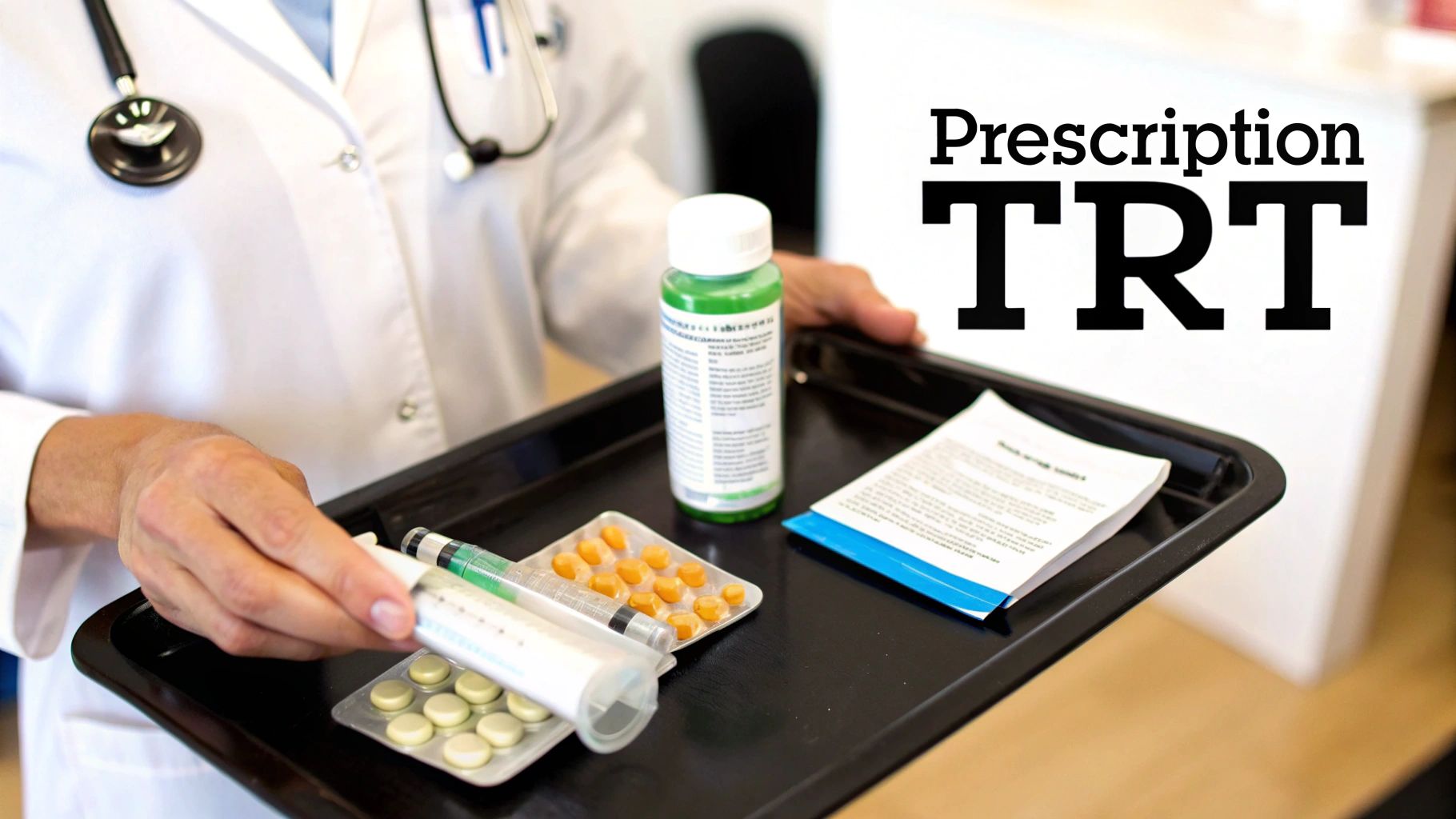
When we talk about boosting testosterone, it's crucial to draw a hard line between supplements and actual medical treatment. Prescription Testosterone Replacement Therapy (TRT) is squarely in the medical camp. It’s not a "booster" or a general wellness product—it's a targeted medical intervention for a diagnosed condition.
Think of it this way: if your car has a confirmed mechanical problem that’s killing its power, you don’t just pour in a fuel additive and hope for the best. You get a mechanic to fix the broken part. TRT is that fix, prescribed by a doctor only when your body is proven to be underproducing its own testosterone.
This treatment is reserved for men with a condition known as hypogonadism. That's the clinical term for when the testes don't produce enough testosterone, leading to levels that are confirmed to be low through blood tests. TRT is a precise solution designed to bring your testosterone back into a normal, healthy range—not to push it to superhuman levels.
The Different Forms of TRT Available in Canada
In Canada, TRT isn't a one-size-fits-all deal. Doctors have several delivery methods to work with, and each comes with its own set of pros and cons. The right choice for you will hinge on your lifestyle, your medical history, and what you're comfortable with.
The main goal is always to mimic the body’s natural hormone rhythm as closely as possible. This means maintaining stable levels without the wild peaks and valleys that can mess with your mood and energy. It's a huge reason why medical supervision is non-negotiable.
Here are the primary forms of prescription testosterone you’re likely to come across:
- Injections: This is a common and cost-effective route. Testosterone is injected into a muscle, usually every one to two weeks, where it slowly releases into your bloodstream.
- Topical Gels: Applied to the skin every day (typically on the shoulders or upper arms), these gels get absorbed directly into the body. Their big advantage is maintaining stable daily hormone levels.
- Patches: Similar to gels, you stick a patch on your skin once a day. It provides a steady, continuous release of testosterone.
- Oral Capsules: A newer option here in Canada, these capsules are taken with food. They're convenient but demand consistent daily dosing to be effective.
Every method has its trade-offs. For instance, gels and patches are easy to use but come with a risk of skin irritation and accidentally transferring the hormone to someone else through skin contact. Injections are less frequent, but they can cause more noticeable swings in hormone levels between doses.
Weighing the Pros and Cons
Figuring out the right TRT method is a conversation between you and your healthcare provider. Your doctor will help you weigh the good against the bad for each option, all based on your specific health needs.
| Delivery Method | Key Advantages | Potential Disadvantages |
|---|---|---|
| Injections | Cost-effective; infrequent dosing. | Can cause hormone level fluctuations ("peaks and troughs"); requires a needle. |
| Gels | Provides stable daily hormone levels; easy to apply. | Risk of skin irritation; potential for transfer to others through contact. |
| Patches | Delivers a steady dose; convenient. | Can cause significant skin irritation or rashes at the application site. |
| Oral Capsules | Convenient and non-invasive; avoids skin issues. | Requires consistent daily dosing with food; may have different absorption rates. |
The fundamental principle of TRT is restoration, not enhancement. It's about bringing a deficient system back to its normal state of balance so that it can function properly, alleviating the symptoms of medically diagnosed low testosterone.
This is a critical distinction to make when you're looking into testosterone supplements in Canada. While TRT directly adds the hormone your body is missing, supplements are designed to support your body's own production. They are two completely different tools for two completely different jobs.
Understanding this difference is the first step toward having a smart, productive conversation with your doctor. If you suspect you have low testosterone, getting a medical assessment is the only safe and effective place to start. For those looking to support their overall wellness with high-quality products, feel free to explore our thoughtfully curated shop page.
Exploring Over-The-Counter Testosterone Boosters
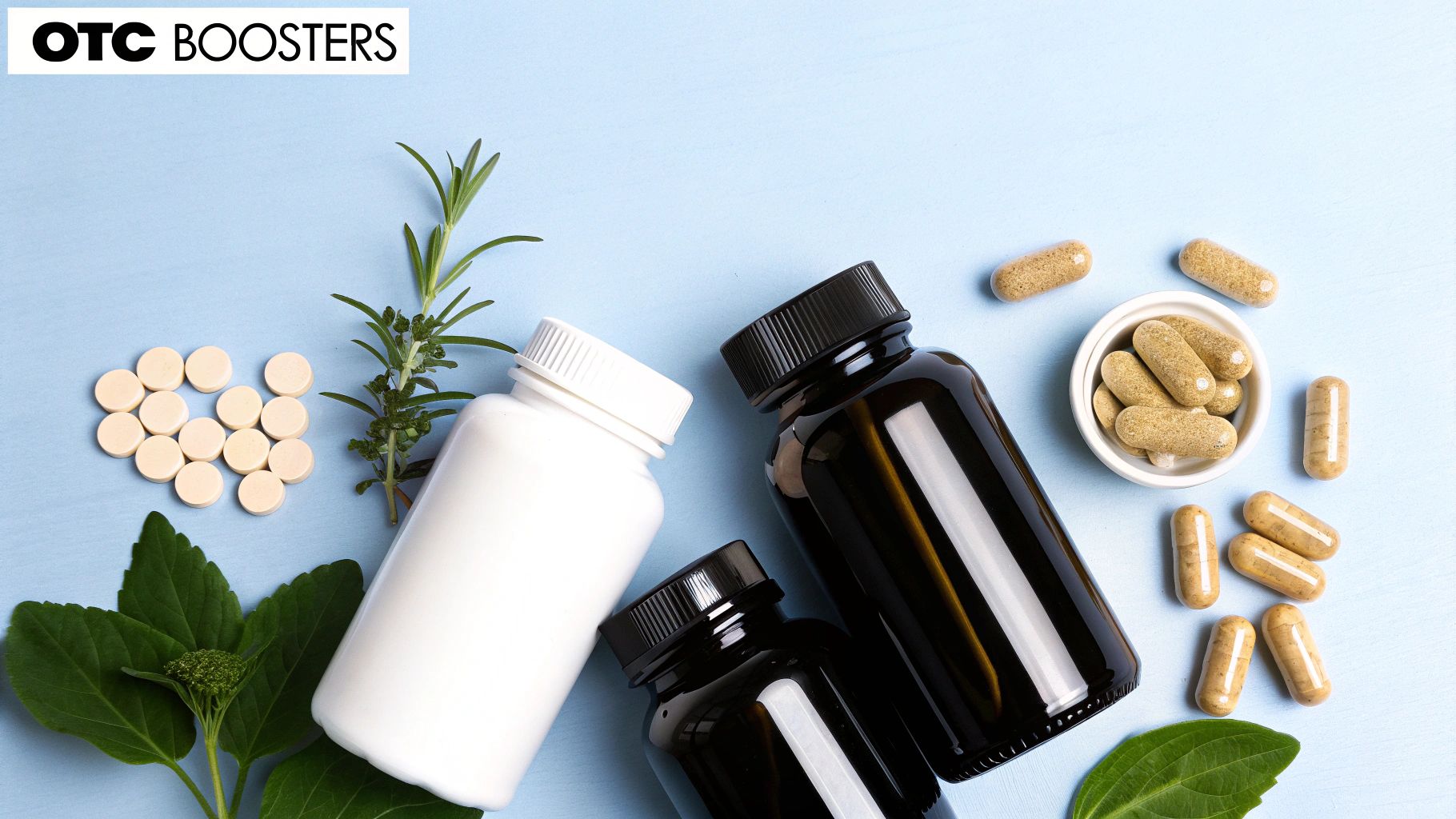
As we move from prescribed therapies to the stuff you see on store shelves, it’s crucial to know what "testosterone boosters" actually are. The single most important thing to understand is this: these over-the-counter supplements do not contain any actual testosterone. This is the fundamental difference that separates them from Testosterone Replacement Therapy (TRT).
So, what do they do? They’re designed to support your body's own natural hormone production. Think of your body like a car factory. TRT is like having fully built engines shipped in from somewhere else. Testosterone boosters, on the other hand, are like giving your factory better raw materials—high-grade steel, skilled workers, and optimized machinery—so it can build more powerful engines on its own.
These supplements are usually a mix of vitamins, minerals, and herbal extracts. The goal is to provide the key nutrients involved in the complex symphony of hormone production, optimizing your internal environment rather than introducing an external hormone.
Unpacking Common Ingredients in Canada
Take a look at the labels of testosterone supplements in Canada, and you'll start to see a recurring cast of characters. Each one is there for a reason, though the scientific backing can range from rock-solid to still-emerging.
To help you make sense of it all, here's a quick look at some common ingredients, what they're supposed to do, and where the science currently stands.
| Common Ingredients in Canadian Testosterone Supplements | ||
|---|---|---|
| Ingredient | Proposed Benefit | Level of Scientific Evidence |
| Zinc | An essential mineral for hormone synthesis. Deficiency is directly linked to low testosterone. | Strong. Supplementing can restore levels in deficient men but may not boost T in those with adequate zinc. |
| Vitamin D | Often called the "sunshine vitamin," it acts like a hormone. Linked to testosterone production pathways. | Moderate to Strong. Strong correlation between sufficient Vitamin D and healthy T levels, especially in deficient individuals. |
| D-Aspartic Acid (DAA) | An amino acid thought to stimulate hormone release in the brain. | Mixed. Some studies show a temporary boost, particularly in sedentary men, but others show no effect. |
| Fenugreek | A herb containing compounds believed to support natural T levels and improve libido. | Moderate. Promising research suggests it can help with symptoms of low T, but more studies are needed. |
| Magnesium | A crucial mineral involved in over 300 enzymatic reactions, including those related to testosterone. | Moderate. Research indicates a positive association between magnesium levels and testosterone, especially in active men. |
| Ashwagandha | An adaptogenic herb known for reducing cortisol (the stress hormone), which can indirectly support testosterone. | Moderate. Several studies show it can increase T levels, particularly in men under stress. |
As you can see, the effectiveness often depends on your individual situation. For example, taking extra zinc won't do much if your levels are already fine. This is why a one-size-fits-all approach rarely works.
Setting Realistic Expectations
The market for these products is booming. Projections show the Canadian testosterone booster market is set to grow at a compound annual rate of 8.04% through 2033, largely because more men are paying attention to their health.
But with growth comes a lot of marketing hype. It's easy to get swept up in bold claims, so it’s vital to separate what’s promising from what’s just noise.
Over-the-counter testosterone boosters are best seen as tools in a larger wellness strategy. They are not a replacement for medical treatment, nor are they a magic pill that can undo the effects of a poor diet, no exercise, or chronic stress.
Their main job is to fill potential nutritional gaps and support the body’s own systems. For men looking to support their hormonal health—especially when it comes to related issues like sexual function—it's worth exploring all the angles. If that's a key concern, you can check out our guide on the best testosterone boosters for erectile dysfunction for a more focused breakdown.
Ultimately, making an informed choice comes down to reading labels, understanding the ingredients, and keeping your expectations in check. You can find a selection of high-quality, NPN-approved supplements on our shop page.
How to Stay Safe with Health Canada’s Rules
When you’re looking into any health product, your safety has to be the number one priority. In Canada, that’s where Health Canada comes in. Think of them as the country's top health watchdog, making sure that both prescription drugs and natural supplements meet tough standards for safety, quality, and effectiveness.
Getting a handle on how this system works is your first line of defence in making smart, safe choices.
Imagine the entire market for health products is a massive, busy highway. Health Canada is the one setting the speed limits, putting up the guardrails, and making sure every single vehicle has passed a rigorous safety check. Their job is to keep dangerous products off the road and away from you. This applies to everything from powerful prescription treatments to the supplements you see on store shelves.
For any health product to be sold legally in Canada, it has to go through a strict review process and get an authorization number. This number is your proof that the product has been properly vetted and is up to Canadian standards.
How to Read Health Canada's Approval Numbers
So, how do you know if a product is legit? It’s actually pretty simple. Health Canada uses two main types of identification numbers, and they must be printed right on the label.
- Drug Identification Number (DIN): This is an eight-digit number you'll find on all prescription drugs, including legitimate Testosterone Replacement Therapy (TRT). If a product claims to be medical-grade testosterone, it absolutely must have a DIN. No exceptions.
- Natural Product Number (NPN): This number is for natural health products, like the over-the-counter testosterone boosters you might see online or in health food stores. An NPN tells you that Health Canada has reviewed the product’s ingredients, checked its health claims, and verified its safety information.
Think of these numbers as an official seal of approval. If you see a product without a DIN or NPN, that's a huge red flag. It means it's being sold illegally and hasn't been checked for safety or quality by anyone who knows what they're doing.
The Risks of Medically Supervised TRT
Even when it's done by the book, prescription TRT is a serious medical treatment. It comes with potential risks and demands ongoing monitoring from a doctor. This isn't just some casual wellness boost; it’s a powerful hormonal therapy that needs to be respected.
Because of this, Health Canada keeps a close eye on any reported problems. As of August 31, 2013, the agency had received 35 reports linking testosterone products to cardiovascular issues. This finding was significant enough to trigger updated labelling requirements, warning both doctors and patients about these potential dangers. You can read Health Canada's full review on testosterone safety to see their findings for yourself.
A doctor’s supervision isn't just a suggestion—it's non-negotiable. You’ll need regular blood tests and check-ins to make sure your hormone levels are in a safe range, manage any side effects, and keep an eye on your overall health, especially your heart and prostate.
The Dangers Hiding in Unregulated Online Shops
The biggest risk by far is trying to cut corners and buy from sketchy online sources. Purchasing testosterone or products that claim to contain it from unverified websites is like playing Russian roulette with your health. These sellers operate completely outside of Health Canada’s watch, meaning you have no idea what you’re actually getting.
Here’s a taste of what could be in that unmarked bottle:
- Counterfeit Junk: Fake pills or vials with zero active ingredients. You’re just wasting your money.
- Contaminated Products: Stuff made in dirty, unsanitary labs that could be full of bacteria or harmful chemicals.
- Wrong Dosages: Pills with way too little of the active ingredient, or worse, a dangerously high amount.
- Hidden Drugs: Some of these unregulated products secretly contain other prescription drugs that aren't listed on the label. This can lead to severe, even deadly, interactions. For example, some unlisted ingredients can react badly with heart medications, which is a similar concern for men managing ED. To get a better sense of common ED treatments, you can learn about how sildenafil is used in our guide.
The only safe way forward is to stick with regulated testosterone supplements in Canada or to pursue TRT through a licensed physician. Always look for that DIN or NPN on the label—it’s your best defence. For trusted, NPN-approved health products designed to support your wellness goals, you can explore our shop with confidence.
How To Get Tested and Treated Safely in Canada
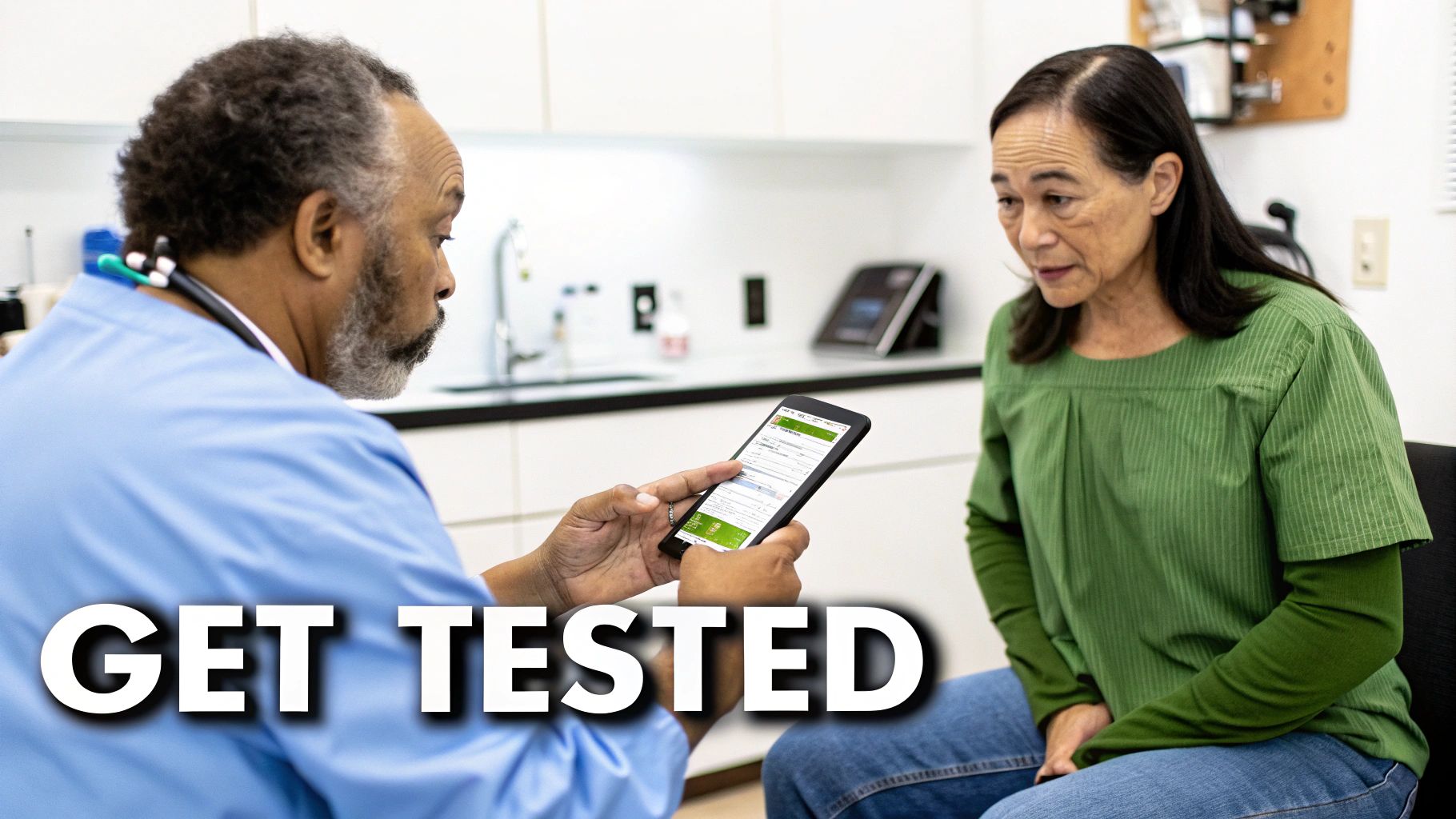
If you're dealing with symptoms that point to low testosterone, figuring out the next step can feel overwhelming. The good news is that getting answers through the Canadian healthcare system is a straightforward, structured process. It all starts with a simple conversation—not with supplements or trying to fix it yourself.
Recognizing the signs is the first real step. Persistent fatigue, a dip in your mood, or a noticeable drop in libido are all cues that it's time to talk to a healthcare professional. Your family doctor is the ideal place to begin. They know your health history and can guide you from there, providing a referral if one is needed.
The Diagnostic Journey Step By Step
Getting a proper diagnosis isn’t a guessing game. It’s a methodical process designed to make sure any treatment you receive is both necessary and safe. The goal is to build a complete picture of your health, not just chase a single number on a lab report.
Here’s how it usually unfolds:
- Symptom Review: Your doctor will start by asking detailed questions about how you’ve been feeling. It’s important to be open about your energy levels, mood, sex drive, and anything else that’s changed.
- Medical History: They'll go over your entire medical background, including any existing conditions or medications you’re on. This helps rule out other things that could be causing your symptoms.
- Physical Examination: A quick physical check-up helps round out the initial assessment.
- Blood Testing: This is the most important part. A blood test is the only way to know for sure what your testosterone levels are. Your doctor will likely order a "total testosterone" test and sometimes a "free testosterone" test. These are almost always done in the morning, when your T levels are naturally at their peak.
Only with a combination of your symptoms and blood tests confirming low testosterone can a doctor make an official diagnosis of hypogonadism.
The Growing Role of Telehealth in Canada
Telehealth has become a game-changer in Canadian healthcare, offering a convenient and private way to get medical advice. For men's health issues, these virtual services are especially useful.
Virtual clinics let you connect with doctors and specialists without leaving your home. This can make the whole process smoother, from the first chat about your symptoms to getting a lab requisition for blood work. Once the results are back, a follow-up video call is all it takes to discuss the findings and create a treatment plan, including prescriptions for TRT if it's the right fit for you.
Seeking a diagnosis is an act of taking control of your health. A professional medical assessment provides clarity, ensuring that any action you take is based on solid evidence rather than speculation.
Asking the Right Questions
Once you have a diagnosis, you need to be an active part of the solution. Think of your doctor as a partner. Asking the right questions is the key to making smart decisions for your health.
Here are a few things you should consider asking:
- What are the potential benefits and risks of the treatment you’re recommending for me?
- Are there lifestyle changes I can make that might help my hormone levels?
- What are the different types of TRT available, and why is one better for my situation?
- How often will I need follow-up appointments and blood tests to monitor everything?
- What are the estimated costs for this treatment plan?
Sometimes, you need a specialist. For those in larger cities, finding a clinic dedicated to men's health is a great option. To get a better idea of what that looks like, you can explore the services of a men's health clinic in Toronto to see an example of this focused approach.
By arming yourself with knowledge and working openly with your doctor, you can navigate the path to diagnosis and treatment safely and effectively.
Making an Informed Choice for Your Health
Navigating men's health can feel like a minefield, especially when you start looking into testosterone supplements in Canada. Let's cut through the noise. Throughout this guide, we've drawn a hard line between medically prescribed Testosterone Replacement Therapy (TRT) and the over-the-counter supplements you see online. They are two completely different tools for two completely different jobs.
Think of it this way: TRT is a targeted medical treatment prescribed by a doctor for a diagnosed condition like hypogonadism. Supplements, on the other hand, are part of a wellness strategy. Their goal is to give your body the nutritional building blocks it needs to produce hormones on its own.
The Foundational Role of Lifestyle
Before you even think about a supplement or therapy, you have to get real about your daily habits. Your lifestyle choices are the absolute bedrock of your hormonal health. No pill or injection can ever replace them.
These habits are the pillars holding everything up. Get them right first.
- A Solid Diet: Eating plenty of lean proteins, healthy fats, and getting key micronutrients like zinc and magnesium gives your body the raw materials it needs to make testosterone.
- Consistent Exercise: It’s no secret that regular physical activity, especially lifting weights, can have a positive impact on testosterone levels.
- Stress Management: Being chronically stressed jacks up your cortisol, a hormone that directly interferes with testosterone production. You have to find a way to keep it in check.
- Quality Sleep: Your body does some of its most important hormone production while you're asleep. Aiming for 7-8 hours a night isn't a luxury; it's essential for hormonal balance.
These pieces all work together, creating an environment where your body can actually perform at its best. Supplements should be seen as a way to support this foundation, not build it from the ground up.
Your Path Forward
If there's one thing you take away from this, it's this: always, always talk to a healthcare professional before starting something new. Trying to self-diagnose or treat what you think is a hormone issue is a recipe for disappointment and can even be risky. A doctor is the only one who can give you accurate tests, figure out what's really going on, and create a plan that's both safe and effective for you.
A proactive and informed approach is your best bet. When you prioritize a healthy lifestyle and get professional advice, you're the one in the driver's seat of your health journey. To support your wellness goals with high-quality, Health Canada-approved products, we invite you to explore the carefully selected options available on our shop page.
Frequently Asked Questions
When you start looking into testosterone supplements in Canada, a lot of questions pop up. Getting clear, simple answers is the first step toward making choices that are safe and right for your health. Let’s tackle some of the most common ones we hear.
Are Testosterone Boosters Legal in Canada?
Yes, the over-the-counter supplements you see marketed as "testosterone boosters" are perfectly legal to buy in Canada, but there's a big string attached. They have to be licensed by Health Canada and show a Natural Product Number (NPN) on the label. Think of the NPN as a seal of approval, confirming the product meets Canadian standards for quality and safety.
It's crucial to understand what these products do. They use ingredients like herbs, vitamins, and minerals to help your body’s own hormone production. Pure, actual testosterone is a different story entirely—it's a controlled substance and is illegal to have or sell without a prescription from a licensed doctor.
How Do I Get a Prescription for Testosterone?
If you need actual testosterone, getting a prescription in Canada isn't a casual process. It’s a strictly regulated medical procedure that always starts with seeing a licensed doctor, whether you go to a clinic or use a telehealth service.
Here’s what the process looks like:
- Talk About Your Symptoms: You’ll have an open conversation with your doctor about what you're experiencing—things like persistent fatigue, a drop in sex drive, or mood swings.
- Get Your Blood Tested: Your doctor will order blood work to get a precise measurement of your hormone levels. This is the only real way to know if you have a clinical deficiency.
- Receive a Diagnosis: If the tests confirm you have hypogonadism (the medical term for clinically low testosterone), your doctor can then legally prescribe Testosterone Replacement Therapy (TRT).
Once you have that prescription, it has to be filled at a licensed Canadian pharmacy. No exceptions.
What Are the Risks of Buying Testosterone Online?
Trying to buy testosterone from unregulated websites is more than just illegal—it’s a massive gamble with your health. These sellers operate in the shadows, completely outside of Health Canada's watch, and their products can be incredibly dangerous.
When you buy from an unregulated online source, you have no idea what you’re actually getting. The product could be a total fake, contaminated with bacteria, dosed incorrectly, or even laced with other hidden, dangerous drugs. You’re putting yourself at risk for serious health problems with zero legal protection if something goes wrong.
Always, always stick to licensed Canadian pharmacies for any prescription. And if you're looking at supplements, double-check for that NPN. It’s why we’re so careful about the products selected for our shop page.
Do Natural Testosterone Supplements Really Work?
The effectiveness of natural testosterone supplements is really individual. Their goal isn't to replace medical TRT for men with a diagnosed deficiency. Instead, they're designed to support your body's natural hormone systems, especially if you have nutritional gaps that are holding you back.
The products in our shop are chosen because they contain ingredients that have some scientific evidence behind them. For example, minerals like zinc and magnesium are essential building blocks for testosterone production, so supplementing can help bring your levels back to a healthy baseline if you're deficient. Vitamin D is another one with strong links to hormonal health.
Ultimately, these supplements work best as part of a bigger picture—one that includes a healthy diet, consistent exercise, and good sleep.

 English
  French
https://shorturl.fm/RjlRw
https://shorturl.fm/p4miN
https://shorturl.fm/xCsZj
Your point of view caught my eye and was very interesting. Thanks. I have a question for you.
I don’t think the title of your article matches the content lol. Just kidding, mainly because I had some doubts after reading the article. https://accounts.binance.info/ro/register?ref=HX1JLA6Z
Thank you for your sharing. I am worried that I lack creative ideas. It is your article that makes me full of hope. Thank you. But, I have a question, can you help me? https://accounts.binance.com/sv/register-person?ref=GQ1JXNRE
Thank you for your sharing. I am worried that I lack creative ideas. It is your article that makes me full of hope. Thank you. But, I have a question, can you help me? https://accounts.binance.com/register-person?ref=IHJUI7TF
Your point of view caught my eye and was very interesting. Thanks. I have a question for you.
Can you be more specific about the content of your article? After reading it, I still have some doubts. Hope you can help me. https://www.binance.bh/register?ref=JW3W4Y3A
Your article helped me a lot, is there any more related content? Thanks!