
Uncategorized
Finding Your Sildenafil Dosage for ED A Complete Guide
For most guys, the journey with sildenafil starts at a 50 mg dose, usually taken about an hour before you plan to be intimate. But think of this as a starting line, not a finish line. Finding the right dose is a personal process, and it’s crucial to work with a medical professional who can tailor it to your specific health needs for the best and safest results. You can find a range of options on our sildenafil shop page.
Finding Your Ideal Sildenafil Dosage
Figuring out the right sildenafil dosage isn't about following a rigid formula; it's more like getting a suit tailored. It has to fit you perfectly. The goal is simple: find the lowest possible dose that gives you the results you want with the fewest side effects. This is where a healthcare provider is essential, as they’ll look at your medical history, any other medications you’re taking, and how your body responds.
This adjustment process, sometimes called titration, involves starting with a standard dose and tweaking it based on your experience. If the initial dose isn't quite getting the job done, your clinician might suggest an increase. On the other hand, if you run into side effects that are bothering you, they'll likely lower it.
The Standard Dosage Range
Sildenafil generally comes in three strengths, and each one has its place in a treatment plan. Knowing what they are helps you have a much clearer conversation with your doctor about what to expect. Here in Canada, where erectile dysfunction affects nearly 49% of men over 40, the approach is pretty standard: begin with 50 mg and adjust down to 25 mg or up to 100 mg depending on how well it works and how you feel. The golden rule is never to take more than one dose in a 24-hour period.
To give you a better idea, here's a quick look at the typical dosages.
Sildenafil Dosage Strengths at a Glance
This table breaks down the three standard sildenafil doses and who they're generally best for.
| Dosage Strength | Typical Use Case | Key Consideration |
|---|---|---|
| 25 mg | For men sensitive to side effects or those with certain health conditions that require a lower dose. | A cautious starting point when a higher dose might be too much. |
| 50 mg | The most common starting dose, offering a good balance of effectiveness and tolerability. | Considered the "sweet spot" for most men trying sildenafil for the first time. |
| 100 mg | The maximum recommended dose, prescribed if the 50 mg dose isn't effective enough. | Reserved for when lower doses don’t produce a firm enough erection after several tries. |
Remember, your ideal dose is the one that works consistently and comfortably for you.

Your dosage is a dynamic part of your treatment plan. It’s not set in stone and should be reviewed with your provider if your results or side effects change over time. Communication is key to finding your optimal dose.
Ultimately, landing on the right sildenafil dosage is a team effort between you and your healthcare provider. Once you have a prescription that’s right for your needs, you can check out the sildenafil products on our shop page for affordable and discreet options.
How Sildenafil Works to Treat ED
To really get why the right sildenafil dosage is so critical, it helps to understand what’s happening on a biological level. Getting an erection isn’t a simple on/off switch; it’s a finely tuned sequence of events. Sildenafil doesn’t just flood the system—it acts more like a skilled technician fixing one specific, crucial part of the process.
At its core, an erection is all about blood flow. When you’re sexually aroused, your brain sends signals that tell the arteries in your penis to relax and open up. This lets blood rush in and fill two chambers of spongy tissue, which is what makes the penis firm.
But the body has a natural "off switch" for this process: an enzyme called phosphodiesterase type 5 (PDE5). Its job is to break down the chemical messenger that keeps those arteries relaxed. For men with ED, this PDE5 enzyme can be a bit too aggressive, causing blood to drain from the penis too quickly and ending the erection before it has a chance.

The Role of a PDE5 Inhibitor
This is where sildenafil comes in. It’s part of a class of drugs called PDE5 inhibitors. Think of PDE5 as an overeager bouncer at a club, kicking everyone out just as the party gets going. Sildenafil’s job is to temporarily tell that bouncer to take a break.
By blocking PDE5, sildenafil allows the natural chemicals your body produces during arousal to work more effectively and last longer. This keeps the blood vessels relaxed and open, making it much easier to get—and keep—a strong erection. It’s important to remember that sildenafil doesn’t work on its own; you still need to be sexually stimulated to kick things off.
Sildenafil doesn’t create an erection out of thin air. It simply sets the stage, creating the right conditions for your body's natural arousal process to work as it should.
Finding the Efficacy and Tolerability Sweet Spot
This mechanism is exactly why getting the dosage right is so important. The goal is to find the perfect balance between efficacy (how well it works) and tolerability (how well your body handles it without side effects).
-
Too Low a Dose: If your dose is too low, it won't block enough PDE5 to make a real difference. The "bouncer" is still too active, and you might not achieve an erection firm enough for sex.
-
Too High a Dose: On the flip side, a dose that’s too high can block PDE5 too aggressively. While this might lead to a powerful erection, it also ramps up the risk of side effects like headaches, facial flushing, or dizziness.
The ideal sildenafil dosage for ED is the one that inhibits just enough PDE5 for you to get the job done, without causing unpleasant side effects. This "sweet spot" is unique to each person, which is why a medical provider will typically start with a standard dose and adjust it based on your experience. This careful approach ensures you get the results you want, safely.
Once you and your clinician have figured out the most effective and safe dosage for you, you can check out the convenient and affordable options on our sildenafil shop page.
The 50 mg Starting Dose: What to Expect
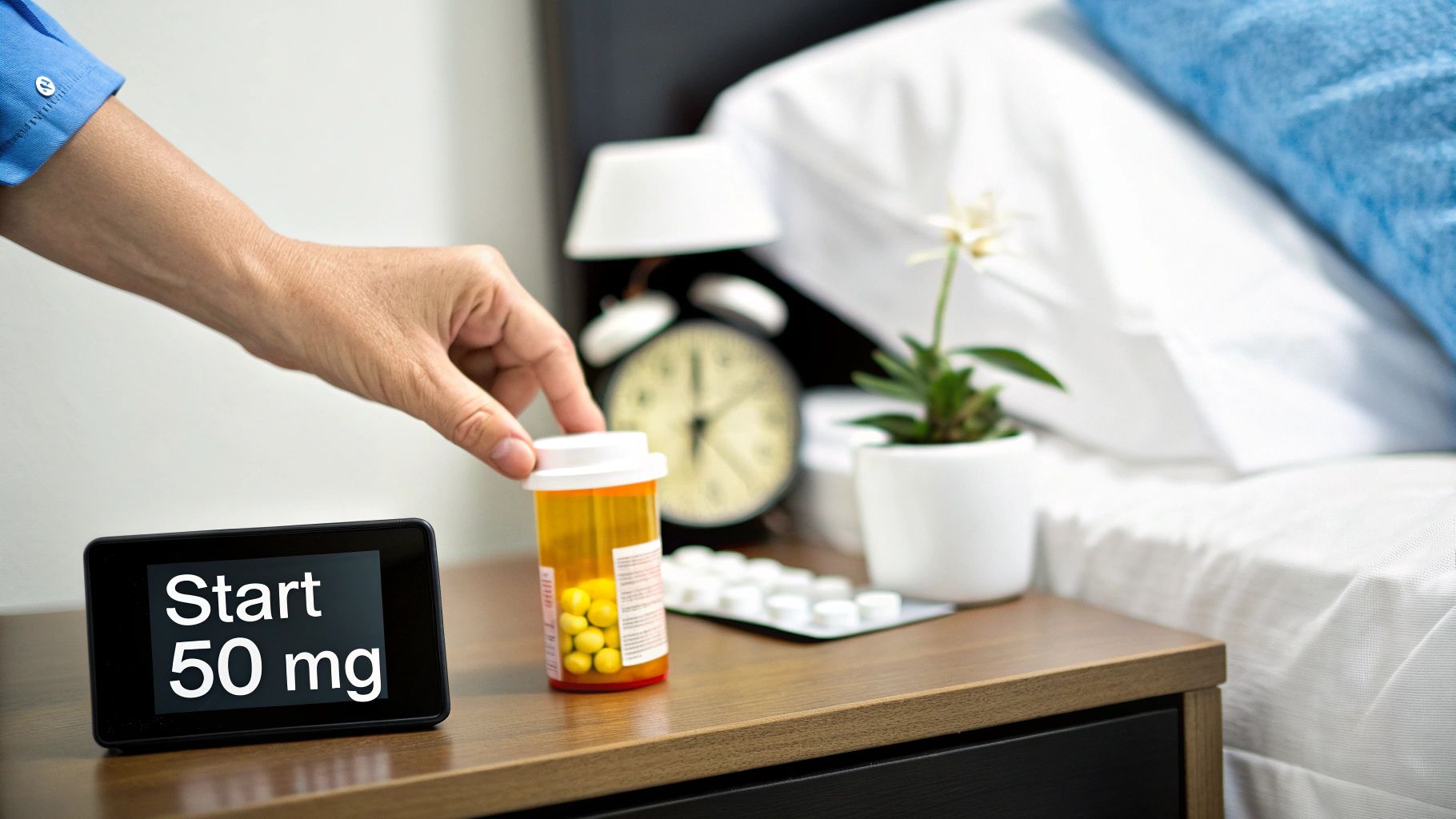
For most men starting treatment for erectile dysfunction, the journey begins with a 50 mg sildenafil dose. This isn't some random number pulled out of a hat; it's a carefully chosen starting point that decades of clinical experience have shown offers the best balance of effectiveness and tolerability for most guys.
Think of it as the sweet spot. It's strong enough to deliver a noticeable improvement for the majority of men, but low enough to keep the risk of side effects to a minimum. Your clinician uses this dose to get a clear picture of how your body responds, creating a baseline for any future fine-tuning.
Setting Realistic Expectations for Your First Time
Heading into your first experience with sildenafil, it helps to know what to expect. This can ease any anxiety and make sure you're using it correctly. The most important thing to remember is that sildenafil is a facilitator, not a magic "on" switch. It sets the stage for an erection to happen naturally, but it doesn't create desire out of thin air.
Here’s a practical look at how it typically plays out:
- Timing is Key: Pop your 50 mg tablet about 30 to 60 minutes before you anticipate sexual activity.
- Arousal is a Must: Sildenafil won’t cause a spontaneous erection. You still need to be sexually stimulated for it to kick in.
- The Window of Opportunity: The effects usually last for about four to six hours. This gives you plenty of time to be intimate without feeling like you're on the clock.
The big takeaway here is that sildenafil works with your body's natural arousal process. It’s a tool designed to make sure that when you feel ready, your body is ready too.
What to Look for and How to Report Back
After taking your first dose, just pay attention to what happens. The main goal, of course, is to achieve an erection firm enough for satisfying sex. Did it work as you'd hoped? Did you notice any side effects, like a mild headache, some facial flushing, or a bit of indigestion?
This feedback is gold for your clinician. It helps them figure out if 50 mg is your perfect dose or if a small adjustment might be needed. Being open and honest about your experience—the good and the not-so-good—is the best way to get your treatment plan dialled in for the long haul.
The success rates for standard dosing are impressively high. For instance, a long-term Canadian study followed 979 men and found that 94% or more of them stayed satisfied with their erections each year over a four-year period. This research really underscores how well-tolerated and effective standard sildenafil dosing is for most men. You can dig into the specifics by reviewing the details of this long-term research on sildenafil satisfaction.
Ultimately, this first step is all about learning how you and the medication get along. Armed with that knowledge, you and your doctor can move forward with confidence. If you've got your prescription and are ready to go, you can find affordable options on our sildenafil shop page.
Adjusting Your Dose: From 25 mg Up to 100 mg
Finding the right sildenafil dose isn’t a one-shot deal; it's more like fine-tuning a radio. The standard 50 mg dose is a great starting point, but it's not the final word.
If that initial dose doesn't quite hit the mark or causes a few unwanted side effects, your doctor won't just leave you hanging. They’ll carefully adjust your dose up or down—a process called titration—to find what works best for your body. The goal is always the same: land on the lowest effective dose that gives you the results you want with the fewest side effects.
When to Consider Increasing to 100 mg
Think of the 50 mg dose as the standard volume setting. If it's just not loud enough to get the job done after a few fair tries, your clinician might suggest turning it up. The maximum recommended dose is 100 mg, and it's usually considered when the 50 mg strength isn't consistently producing an erection firm enough for sex.
It’s crucial to give the 50 mg dose a real chance first. That means trying it on a few different occasions, ideally on an empty stomach and with genuine sexual stimulation. If it still falls short, bumping up the dose could be the right move.
Here’s when an increase to 100 mg might be on the table:
- It’s Not Quite Working: You're not getting an erection firm enough for penetration after trying the 50 mg dose several times.
- The Results Are Spotty: The medication works sometimes, but it’s not reliable enough for you to feel confident.
- You Tolerate It Well: You didn’t experience any bothersome side effects on the 50 mg dose that would make an increase uncomfortable.
A dose increase is a medical decision made with your clinician. It is never safe to take more than your prescribed dose or to exceed 100 mg in a 24-hour period. Doing so dramatically increases the risk of side effects without offering any extra benefit.
Reasons for Decreasing to 25 mg
On the flip side, sometimes the 50 mg dose is a bit too "loud." It works, but it also brings on side effects that, while not dangerous, are annoying enough to get in the way. In these cases, your clinician might suggest turning the volume down to 25 mg. This lower dose often provides the boost you need without the unwelcome distractions.
Dropping the dose is a smart way to find a better balance for your body. You don't need to tough out side effects if a lower strength can still deliver solid results.
A doctor might recommend the 25 mg dose if:
- You’re experiencing bothersome side effects like persistent headaches, facial flushing, stuffy nose, or indigestion on the 50 mg dose.
- You have certain health conditions, like moderate liver issues or severe kidney impairment, which call for a more cautious starting point.
- You're an older adult, as your body might metabolize the medication more slowly, making you more sensitive to side effects.
- You're taking other medications that could interact, such as alpha-blockers used for blood pressure or prostate issues.
This adjustment process is a team effort between you and your healthcare provider. The more open you are about what’s working and what isn’t, the better they can tailor the sildenafil dosage to you. Once you've found your ideal dose, you can find your medication conveniently and affordably on our sildenafil shop page.
Health Factors That Influence Your Sildenafil Dosage
Figuring out the right sildenafil dosage for ED isn't as simple as picking between 25, 50, or 100 mg. A licensed clinician needs to look at your entire health picture to make sure the medication is both safe and effective for you. Think of your body as a unique system—certain factors can change how it processes medications, which calls for a more personalized game plan.
Your overall health is the main guide for your prescription. Before landing on a starting dose, a medical provider will carefully review key parts of your physical condition. This crucial step helps head off potential problems and ensures your treatment is built on a solid foundation of safety.

The Role of Age and Organ Function
As we get older, our bodies naturally change how they handle different substances. For many older adults, this means medications like sildenafil are broken down and flushed out of the system more slowly.
Because of this, a lower starting dose, usually 25 mg, is often recommended to lower the risk of side effects. You can find out more about how age influences your ED treatment options in our detailed guide.
Your liver and kidney health are just as important. These organs are your body’s main filtration and processing centres.
- Liver Health: The liver is in charge of breaking down sildenafil. If you have moderate to severe liver issues, the medication can build up in your system, raising the risk of unwanted effects.
- Kidney Health: Your kidneys are essential for clearing the medication out of your body. Severe kidney disease can also cause higher concentrations of sildenafil to linger in your bloodstream.
For anyone with significant liver or kidney problems, a clinician will almost always start with the lowest possible dose (25 mg) and keep a close eye on how you respond.
Critical Medication Interactions
Maybe the most important factor in deciding your sildenafil dose is what other medications you’re taking. Sildenafil works by relaxing blood vessels to boost blood flow. When you mix it with other drugs that do something similar, it can trigger a dangerous drop in blood pressure.
It’s absolutely vital to give your healthcare provider a full list of every medication you take—that includes prescriptions, over-the-counter drugs, and even supplements. This transparency is non-negotiable for your safety.
Certain medications demand extreme caution, and some mean sildenafil isn't a safe choice for you at all. For instance, nitrates (often prescribed for chest pain) can cause a severe and life-threatening drop in blood pressure when taken with sildenafil. Alpha-blockers, used for high blood pressure or an enlarged prostate, can also cause a significant dip, often meaning a lower sildenafil dose is necessary.
To give you a clearer picture, here’s a quick look at how different health factors and medications can affect your prescribed sildenafil dose.
How Health Factors and Medications Can Affect Your Sildenafil Dose
| Influencing Factor | Potential Impact on Dosage | Reasoning |
|---|---|---|
| Age (Over 65) | Start at a lower dose (25 mg) | Slower metabolism can increase drug concentration and risk of side effects. |
| Severe Kidney Impairment | Start at a lower dose (25 mg) | Reduced kidney function slows the elimination of the drug from the body. |
| Severe Liver Impairment | Start at a lower dose (25 mg) | The liver's reduced ability to break down sildenafil leads to higher levels in the blood. |
| Taking Alpha-Blockers | Start at a lower dose (25 mg) | Combining these medications increases the risk of a sudden drop in blood pressure. |
| Taking Nitrates | Contraindicated (Do Not Use) | The combination can cause a severe, life-threatening drop in blood pressure. |
Ultimately, a thorough medical review is the only way to lock in a sildenafil dosage for ED that is both safe and effective for you. Once a licensed professional gives you a prescription, you can find your medication on our sildenafil shop page.
Finding Your Prescription Safely Online
Knowing your health profile is step one for figuring out the right sildenafil dosage. But how do you turn that knowledge into a safe, legitimate prescription? It used to mean booking a trip to the doctor's office. Now, telehealth platforms offer a private and convenient way to get expert medical advice right from home.
This modern approach puts you in touch with licensed medical professionals who know men's health inside and out. The process is designed to be simple and secure, gathering the exact same critical information a doctor would in person to make sure your treatment is both safe and right for you.
How an Online Consultation Works
Everything starts with a secure online visit. You’ll fill out a detailed questionnaire about your medical history, any health conditions you have, and a full list of medications you’re taking. This isn't just busywork—every single question is there for a reason.
- Medical History: Questions about your heart, blood pressure, and past surgeries give the provider a clear picture of your cardiovascular health.
- Current Medications: Listing everything—prescriptions, over-the-counter drugs, even supplements—is absolutely crucial for preventing dangerous drug interactions.
- Symptoms and Goals: Describing your specific experience with ED helps the clinician understand its severity and what you're hoping to achieve with treatment.
A licensed Canadian provider then carefully reviews your answers. This information allows them to figure out if sildenafil is a safe option and, if it is, to recommend the best starting dose—whether that’s 25 mg, 50 mg, or the maximum 100 mg.
Think of your online consultation as a confidential medical evaluation. The questions are thorough because they're designed to protect your health and personalize your sildenafil dosage, just like an in-person appointment would.
Ongoing Support and Adjustments
Getting your prescription is really just the beginning of the journey. One of the biggest perks of using a trusted telehealth service is having access to ongoing medical support. Your treatment plan isn't set in stone; it's a dynamic process that might need a few tweaks along the way.
If you run into side effects or feel the initial dose isn't quite working as hoped, you can easily reach out to the medical team. This open line of communication means your sildenafil dosage can be safely fine-tuned, helping you find that sweet spot between effectiveness and comfort. It’s all about building a relationship with a healthcare provider who’s there to support you.
This blend of convenience, privacy, and expert medical oversight makes getting treatment easier and more accessible than ever. You get the care you need without the usual hassle, all while knowing a licensed professional has carefully evaluated your health to prescribe the right sildenafil dosage for you.
Ready to take the next step? You can start your secure online visit today. After your consultation, explore our sildenafil products on our shop page to see how you can save on your treatment.
Common Questions About Sildenafil Dosage
When you’re starting a new medication, it’s only natural to have a few questions. When it comes to sildenafil, knowing the practical ins and outs of dosing can help you feel more confident and get the best, safest results from your treatment.
Let’s clear up some of the most common questions men have.
Can I Take More Than 100 mg if It Does Not Work?
No, you should never go above the maximum prescribed dose of 100 mg in a 24-hour window. It's a hard limit for a reason.
Taking more won’t make it work any better, but it dramatically increases your risk of serious side effects. We’re talking about things like a sharp drop in blood pressure, vision problems, or priapism—a painful, prolonged erection that requires immediate medical attention.
If the 100 mg dose isn't giving you the results you hoped for, that's a signal to talk to your doctor, not to double down. They can help figure out what’s going on and explore other ED treatments that might be a better match for you.
What Happens if I Take Sildenafil With Food?
Timing is everything. If you take sildenafil with a heavy, high-fat meal—think a greasy burger and fries—it can seriously slow down how quickly your body absorbs it. This means you might be waiting an hour or more longer than usual for it to kick in.
For the fastest, most predictable results, taking it on an empty stomach is your best bet.
That said, some men find that a light, low-fat snack helps ease minor side effects like an upset stomach. It won’t affect the drug's overall power once it’s in your system, but it can make the experience a bit smoother.
The bottom line? A big meal can delay the start time. Just plan your dose and your dinner accordingly so it's ready to work when you are.
How Often Can I Take My Prescribed Dose?
Sildenafil is strictly a once-per-day medication, regardless of whether you're on a 25 mg, 50 mg, or 100 mg dose. Taking it more often within a 24-hour period won't improve your erections and significantly raises the risk of side effects. Stick to the script your clinician gives you.
If you’re looking for something that offers a bit more spontaneity, you might want to ask your provider about daily alternatives, like low-dose tadalafil. For more answers to common questions, you can also check out our detailed sildenafil FAQ page.
Can I Split a 100 mg Tablet for a 50 mg Dose?
You should only ever split a pill if your doctor or pharmacist has given you the green light. Tablets designed for splitting usually have a score line down the middle to guide you.
Trying to split an unscored tablet is a recipe for an inaccurate dose. You could end up with too much or too little, defeating the purpose of a carefully prescribed treatment.
The safest and most reliable way to get the right dose is to have a prescription for the exact strength you need. If you and your doctor decide to change your dose, they’ll issue a new prescription to make sure you’re taking it correctly and safely.

 English
  French